Feature
Where the Ordinary Lingers.
- A goodbye to Grandpa
I don’t see my grandparents often, and it hit me how fast moving and fleeting life is, especially when you live the width of the country away from someone you love.
During a visit in November I documented the little pieces of memories from my childhood and those everyday habits, talents and expressions we take for granted. I realised how important it is to linger in the ordinary, because those are the things that we are certain to miss most when they are gone.
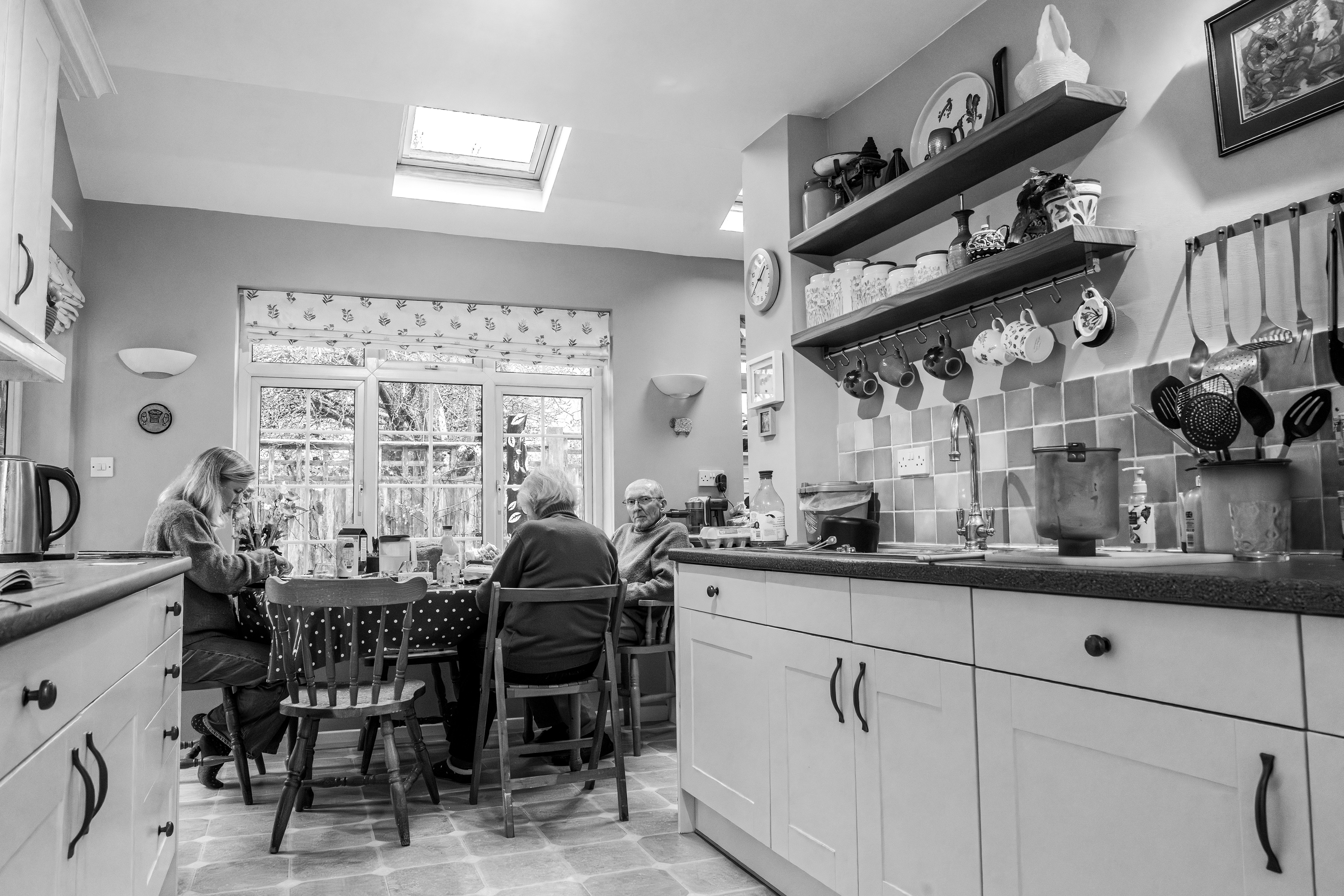
The kitchen has always been the heart of the home.
It’s where Christmas dinners have been stirred and fussed over, where I’ve danced with my aunt and uncle and where easels have been propped while I covered cupboards in powder paint.
On this day, Mum, Grandma and Grandpa sat around the table in a familiar arrangement. Grandpa in his usual place at the head of the table, in the armchair beside the radio - close enough to switch it on at 7 o’clock for The Archers and then for the repeat the following day at 2pm. It’s a ritualistic punctuality we’ve all grown to expect. Around the room, details remain unchanged. The row of mugs hang above the sink and jars of flour on the shelves. By the bin, there have always been bottle tops left on the worktop, ready for a visit to the hospital where they have a bottle top collection box. Only, there were less there than usual as the hospital has become a place frequently visited due to Grandpa’s fragile health.
There’s a photograph somewhere of me sitting on this table, arranging flowers with complete concentration. To me it reflects how the history of this room, where quiet, everyday moments happen, hold the echoes of how precious these ordinary scenes have become.
The Study.
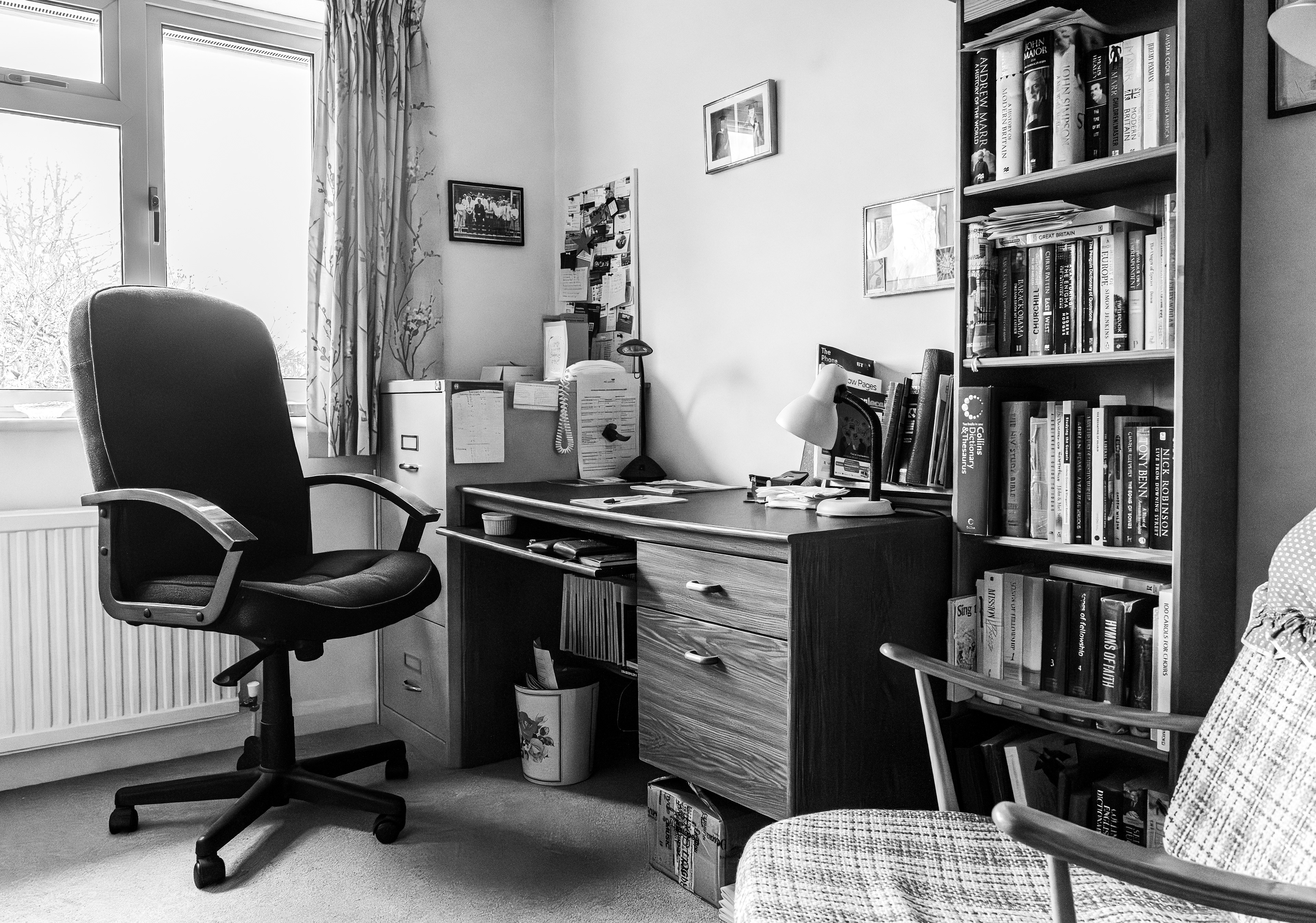
I have always thought of it as more of an old-fashioned, slighly sophisticated man cave. I wasn’t allowed in as a child, but whenever I stayed over, I would sneak a look through the narrow crack in the door. There he’d be, Grandpa in his Ercol armchair, the warm glow of the floor lamp holding him in place as he worked through his sudoku. Completely at ease in his own world.
Everything in this room feels paused in time, with a small coating of dust settling on the record player and the science and astronomy books from his time as a physics teacher. Whenever I did dare step inside, always half expecting to be found out and told off, it felt like standing inside his mind. Ordered, private, a little impenetrable.
Now, I suppose the study is due to pause in a different way. Grandpa still comes in here, but more slowly, more carefully. The quietness of this room feels tender, holding the knowledge that these routines are becoming harder for him. One day the room will change, or maybe disappear altogether. But for me, it will always be the place where I first learned to see him, even if only through a crack in the door.
The kitchen cupboard.
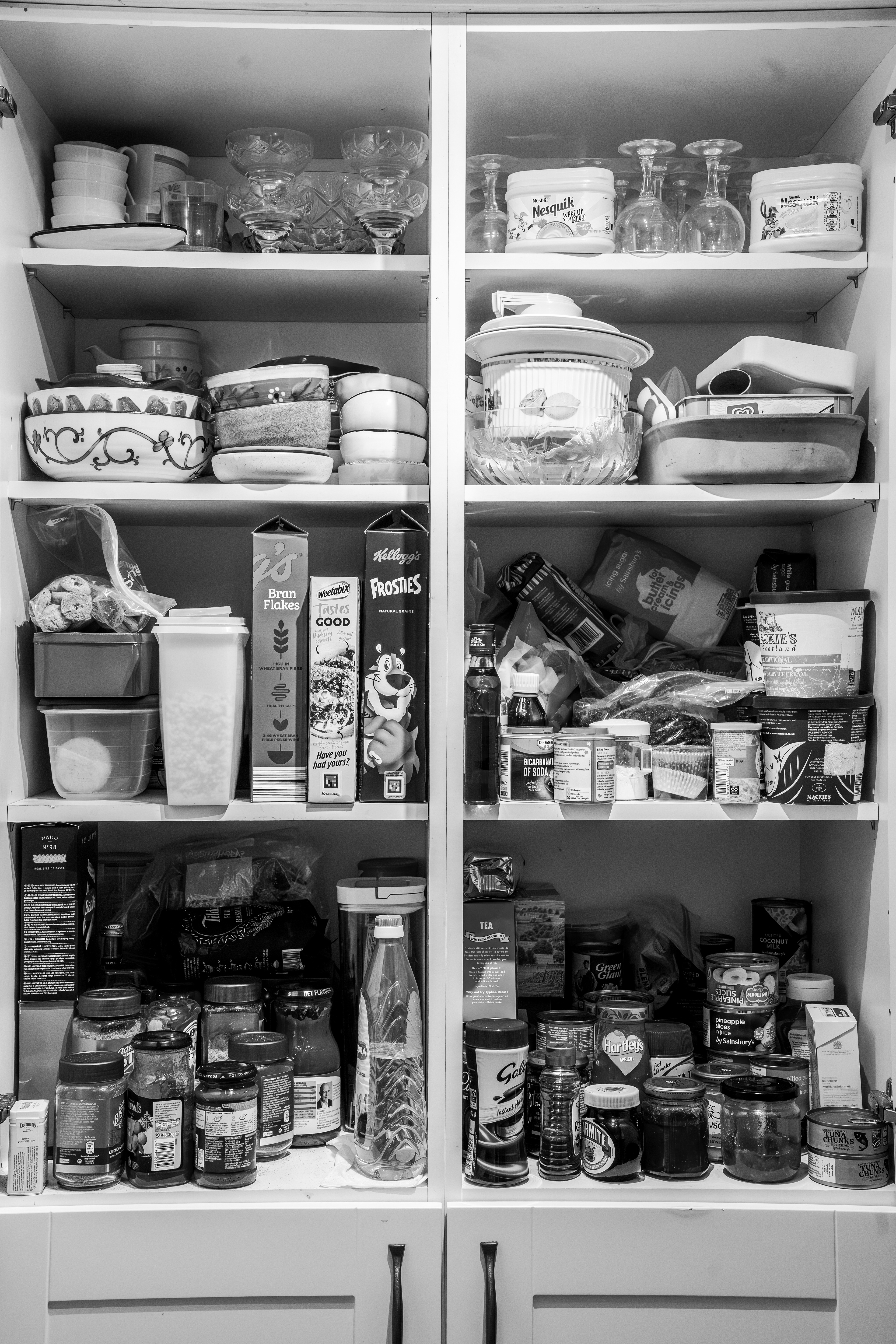
An archive of food, and one whose contents remains mostly unchanged since my mum was a child. Filled to the brim with boxes of cereal, Grandpa’s condensed milk (which he pours generously over his cereal), baking ingredients, tinned fruit, honey, fine china and crystal glasses, ancient Nesquik and the chocolate biscuit box which must surely be an antique by now. A time capsule disguised as a pantry, and a delicious treasure trove.
I spent much of my childhood with my nose in this cupboard while helping Grandma in the kitchen. She’s the one who mostly taught me how to cook, though I was hardly ever allowed to actually do anything. I learned by watching - apparently well enough.
Grandpa’s visits to the cupboard were shorter and more purposeful. Usually to dig out the biscuits. Now, he only allows himself one, but in his painting and decorating days, he used to sneak two when no one was looking.
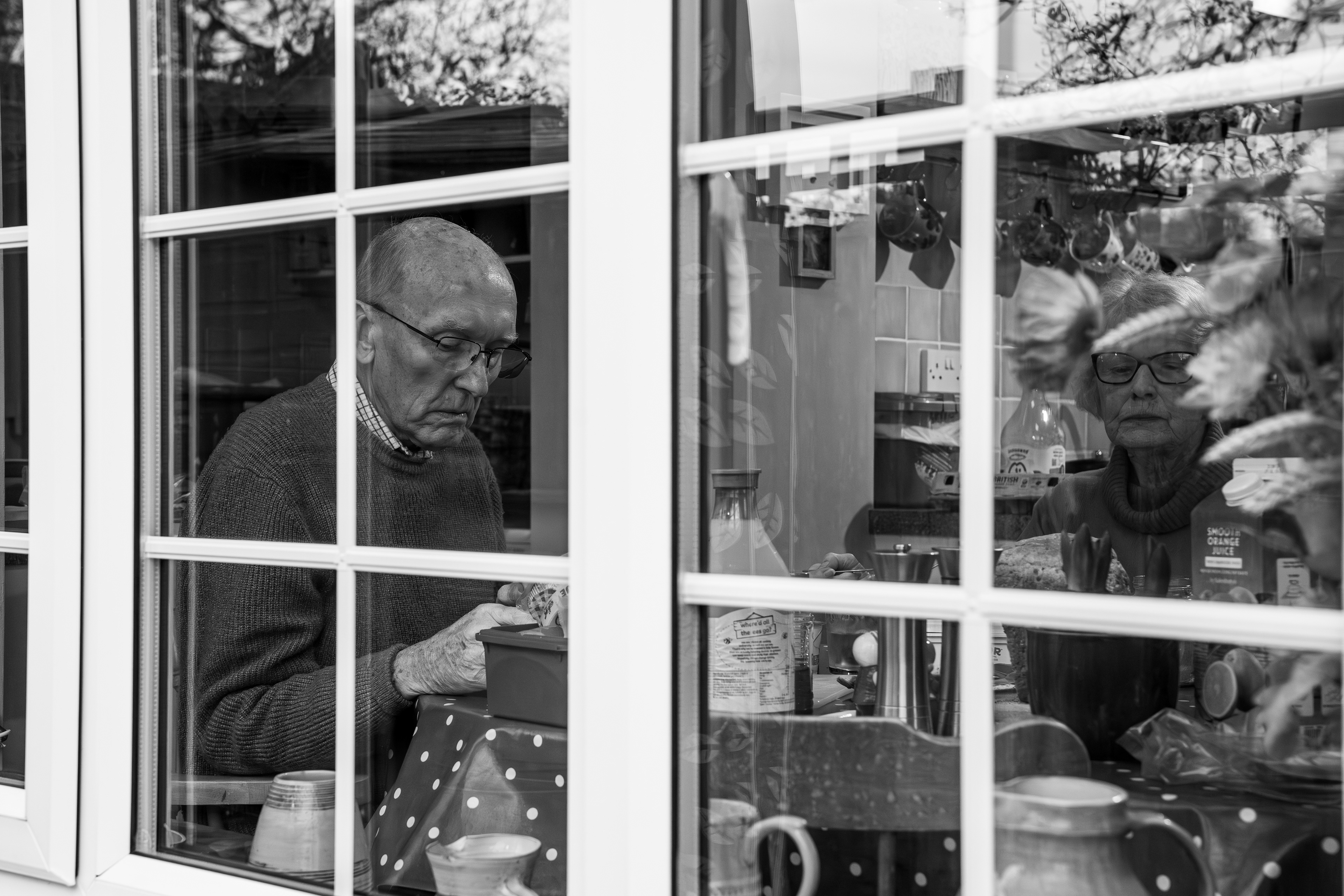
"Can you pass the pepper please?"
Cheeses, pates, cold meats, homegrown tomatoes and homemade chutneys, bread from the bread maker, yoghurts, salads and a scattering of crumbs. This familiar spread lands on the kitchen table everyday as the clock edges towards 1pm. When someone visits, the extra chair is pulled out, the one that shrinks the occupant to half-size for the duration of the meal. Today, it was Grandma’s turn.
Before we began, Grandma watched closely as I cut the bread. She’s particular about the thickness, the neatness and the straightness. I insisted I was capable, saying that my dad being a carpenter gave me ‘inherited credentials and accuracy’.
Lunch with them always strikes the comfortable balance between the rhythm of chewing and the flow of conversation. From outside the window, watching them share this midday ritual felt like observing a small, ongoing act of devotion - to the meal, to the routine and most of all to each other.
Grandpa's domain.
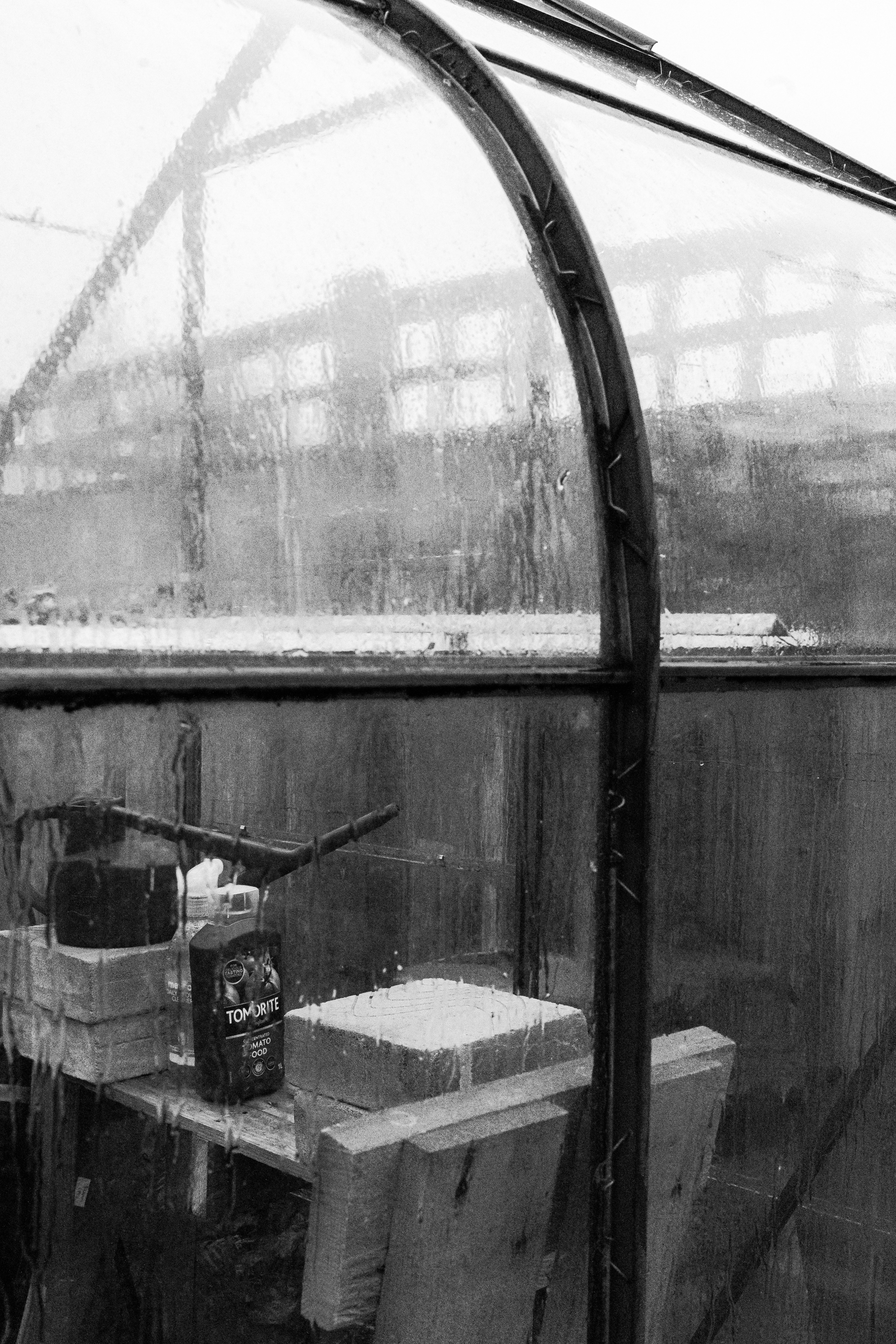
The greenhouse - perhaps the most important feature of the garden.
Usually overflowing with tomato plants and guarded by the black metal cats he places around the outside to scare off the birds (despite the running joke that he’s the one who is afraid of cats), the greenhouse looks dreary now. It’s just after the final harvest, when the tomatoes begin to split and web with age. The long standing habit, as I have known it my whole life, is as follows: clearing everything away and thoroughly putting the greenhouse to sleep for winter.
The last lingering trace of summer, the tomato scented heat and the red fruit hanging heavy on vines, is the bottle of Tomorite left on the work bench, safely under cover from the November rain.
When I was very young...
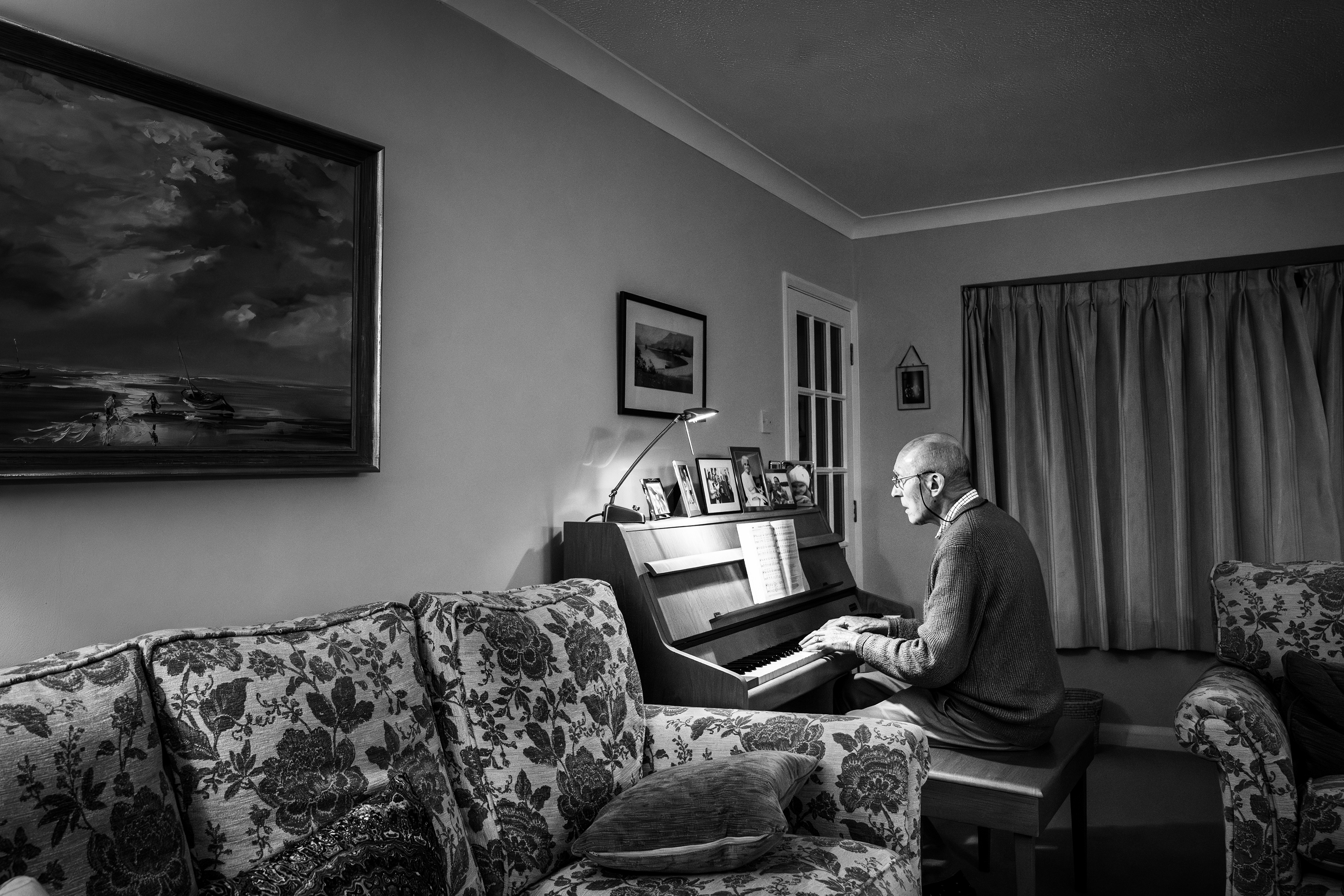
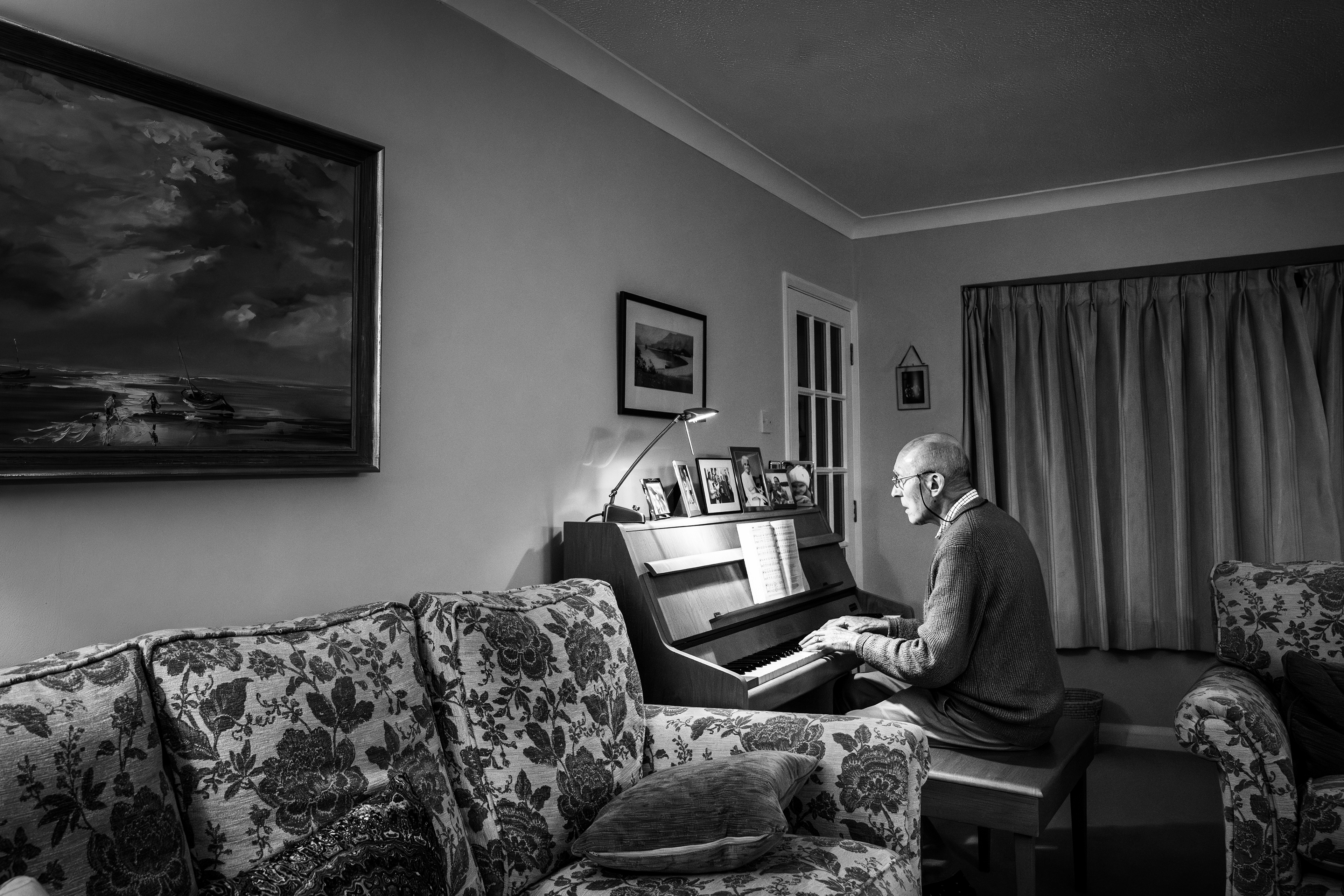
I would sit on Grandpa’s knee as he played the piano, adding my own nonsense tune by thumping along on the keys. I was very good at making it chaotic and loud, and it was something he would just about let me get away with.
This time, it was different. It was the first time I actually asked Grandpa to play for me. Catching me slightly off guard by letting down his often stubborn persona, he agreed to it, rising slowly to fetch his music sheets from the study. There was a gentleness in the moment - perhaps because we both felt the elephant in the room - that this may be one of the last times I’d hear him play. And it was.
When he returned, he settled at the piano and began to play the piece he was practising for a performance at the local care home the following evening. His hands, still sure and expressive, moved over the keys with a familliar ease. For a moment the room seemed to pause in the melody.
'Mother'
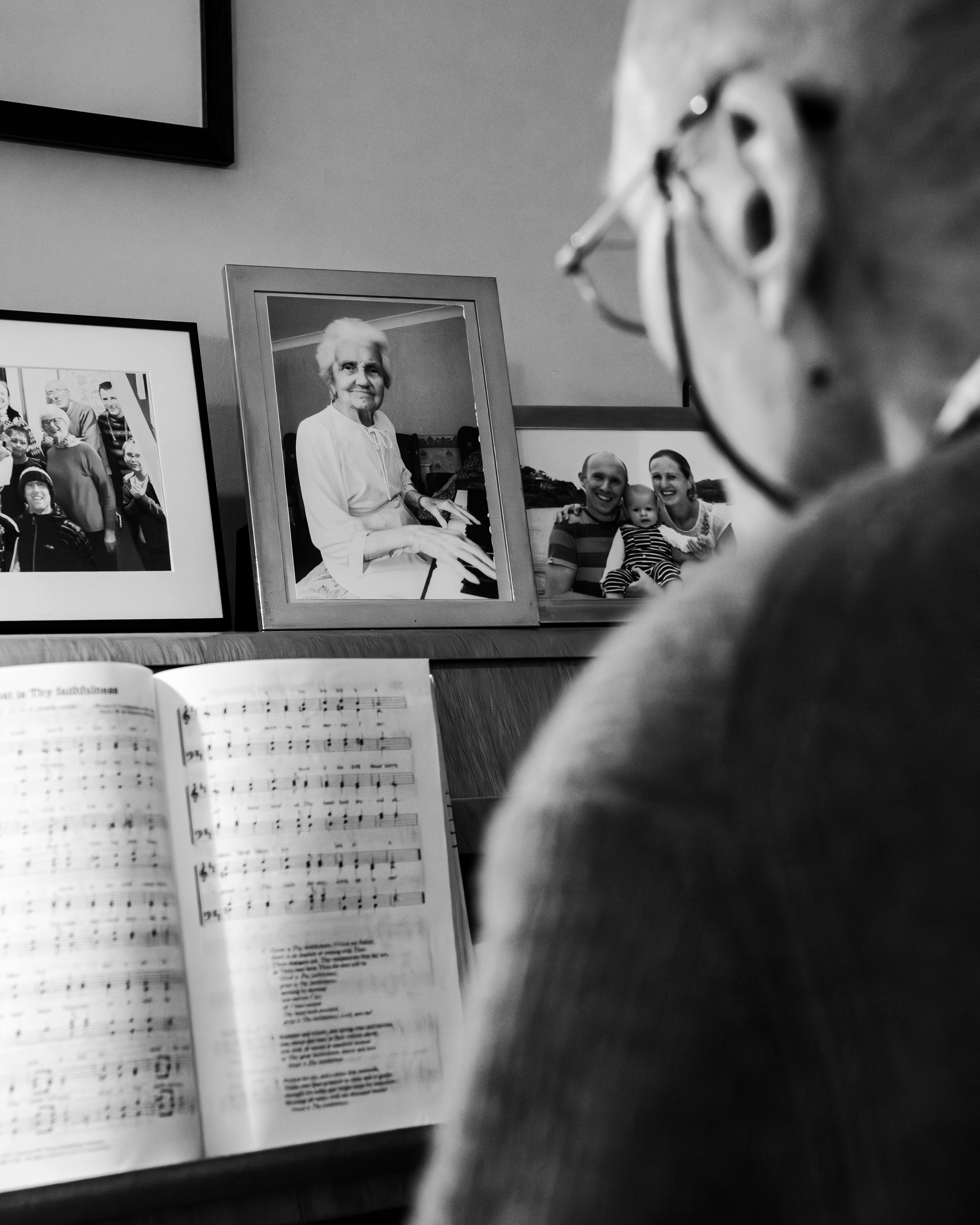
Having known the language of music for as long as he can remember, it’s something Grandpa carries as naturally in his hands as breath in his lungs.
Above the piano sits one of the only photographs of his mother, my great grandma, playing the piano on her hundredth birthday. With her watching from the frame and him playing below, it felt like a quiet duet between them, separated by time but connected through the same instrument.
As the evening settled in, Grandpa kept playing. I paused, letting the notes fill the room, holding onto the warmth of a moment I knew I would want to remember.
with love, Jess x
Grandpa 1942-2026